In short
- According to IRCC’s help centre, supporting documents must be in English or French unless told otherwise. A document already written in one of them therefore needs no translation: the page does not say so word for word, it follows from the rule.
- When a translation is needed, IRCC’s pages do not all say the same thing: translator’s affidavit, copy of the original, certified translator. Follow the list for your application.
- For Cameroon, IRCC states that the bulletin no. 3 is not a police certificate. You need the “Police Clearance Certificate” from the Judicial Police.
- At CamerTrad: 10,000 FCFA per page, fixed. We translate; IRCC decides what it accepts.
Who this is for, and when a translation helps
This guide covers applications sent to IRCC (Immigration, Refugees and Citizenship Canada) by an applicant living in Cameroon: visitor visa, study permit, permanent residence, sponsorship of a relative.
The starting rule is simple. According to IRCC’s help centre, all supporting documents must be in English or French unless told otherwise. A birth certificate in French or a diploma in English therefore needs no translation. A translation only becomes useful for a document in another language.
If all your documents are already in French or English, you may not need us for this step. We would rather tell you so.
The documents involved
Depending on the programme, IRCC mainly asks for these papers. Each has its own page, with what to send for translation.
- Birth certificateAsked for dependent children, and in sponsorship applications for minors.
- Marriage and divorceThe marriage certificate is asked for in visitor visa and residence applications if you are married.
- Criminal recordA police certificate is required for permanent residence. Read the note on the bulletin no. 3 below.
- Diploma and transcriptsA credential assessment (ECA) is required in some Express Entry cases, from a designated organisation.
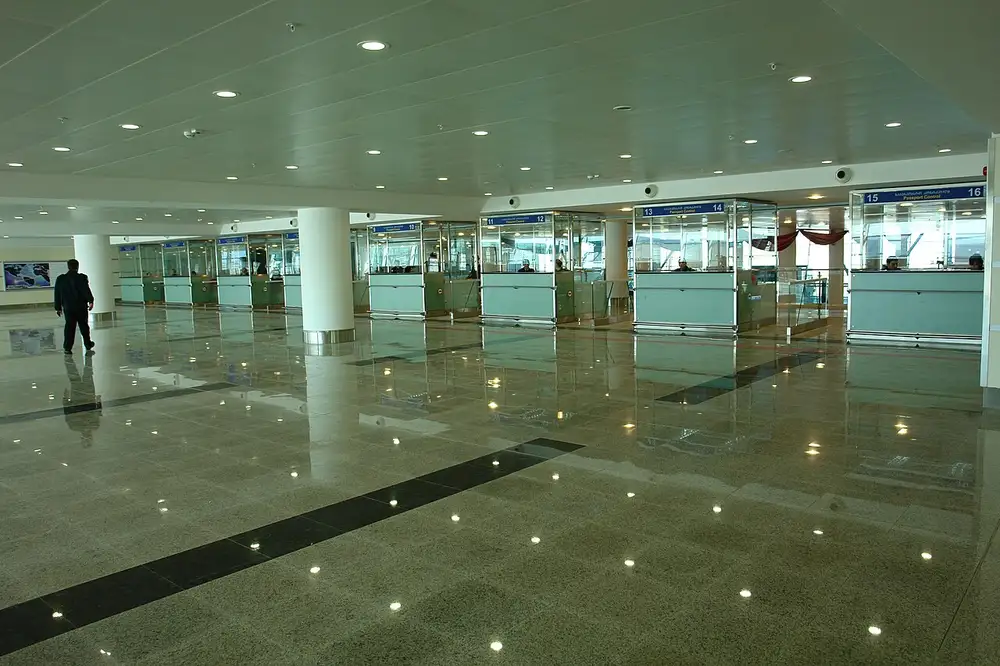

The steps in order
The sequence below follows IRCC’s pages. Translation is step 4 only if a document is in neither English nor French.
- 1
Open the list for your application
Each programme (visitor, study, residence, sponsorship) has its own guide and document list. It is the list that counts, not this guide.
- 2
Spot the documents to translate
Sort your papers: those in French or English need no translation. Only the others do.
- 3
Read what your list requires for a translation
Depending on the page: a translation with the translator’s affidavit, or a translation by a certified translator, with a copy of the original. Note it before you order.
- 4
Have it translated
Send CamerTrad a photo of the official document. The sworn translator translates it in full and puts their seal on it. You receive a PDF.
- 5
Attach the translation and the original
Attach the translation and, depending on your list, a scan of the original or of its certified copy. Submission follows your application route: online or, for Cameroon, through the visa application centre in Yaoundé that IRCC lists.
What IRCC says about a translation
The IRCC pages we read do not all say the same thing. That is why you must follow the list for your application:
- Help centre: the translation must come with the translator’s affidavit and a certified photocopy of the original.
- Visitor and sponsorship guides: the translation is done by a bilingual person or by a translator certified in Canada. A translator certified in Canada does not need to supply an affidavit; otherwise the translator provides an affidavit attesting to their language competence.
- Express Entry and the temporary-to-permanent pathway: attach the translation and a scan of the original. Either a translation by a certified translator who is a member of a professional association in Canada or abroad, with a seal showing their member number; or, only if a certified translator cannot do it, an affidavit.
- The applicant, their family, representatives and consultants may not translate the documents themselves.
These pages speak of translators certified in Canada, or members of an association abroad. They say nothing about Cameroon or about Cameroonian sworn translators. You must check with IRCC whether our translation is enough for your file.

The police certificate from Cameroon
For Cameroon, IRCC’s page on police certificates is clear: only the “Police Clearance Certificate” issued by the Judicial Police in Yaoundé is accepted, and “A Bulletin No. 3 is not a Police Clearance Certificate”. You first obtain the bulletin no. 3, then the certificate from the Judicial Police directorate.
If the certificate is in neither English nor French, IRCC asks for a translation by a certified translator; a translation by family is refused. Translating a bulletin no. 3 for a residence application would therefore be time wasted: check the required document first.
Mistakes that cost time
- Having a document translated that is already in French or English.
- Ordering before reading what your list requires: affidavit, certified copy, certified translator.
- Sending a bulletin no. 3 in place of the police certificate for residence.
- An incomplete translation: back, marginal notes, untranslated stamps. IRCC also asks for stamps and seals to be translated.
- Names spelt differently between certificates and passport. Tell us in your first message.
- Confusing the roles: a translation does not replace a certified copy or an affidavit. Those are separate papers.
What CamerTrad does, and what it does not
Our translations are done by a sworn translator of the Centre Court of Appeal. We translate your documents in full, with the translator’s seal, and hand them over as a PDF.
We do not submit your application and we do not advise on your eligibility for a visa. If your list requires an affidavit or a certified copy, those are separate papers: write to us before you order if you are unsure. IRCC sets its own requirements; we cannot promise it will accept a translation.
Price: a priced example file
10,000 FCFA per page, fixed. A back counts if it carries text, a stamp or a note.
IRCC’s fees, the application centre’s fees, a notary for an affidavit and any parcel are separate. The translation total is quoted on WhatsApp before you pay.
Send a photo of the document to translate: we tell you the page count and the total before any payment.
Send my document for CanadaFrequently asked questions
Do I need to translate my Cameroonian birth certificate for a Canada visa?
According to IRCC, documents must be in English or French. A certificate already in one of them needs no translation. Check the list for your application.
Which police certificate do I need for Canada from Cameroon?
IRCC states that only the “Police Clearance Certificate” from the Judicial Police in Yaoundé is accepted, and that the bulletin no. 3 is not one.
Will IRCC accept a sworn translation done in Cameroon?
We cannot promise it. IRCC’s pages speak of translators certified in Canada or members of an association abroad, or of an affidavit. Check the list for your application.
Can I translate my own documents for IRCC?
No. IRCC states that the applicant and their family may not translate their own documents.
How much does a marriage certificate translation for Canada cost?
10,000 FCFA per page. A one-page certificate costs 10,000 FCFA. IRCC’s fees and any affidavit are separate.
Official sources
Official IRCC and canada.ca pages read on 26 October 2026. Requirements differ by application and can change.
- IRCC help centre: What language should my supporting documents be in? consulted 26 October 2026
- IRCC help centre: police certificate not in English or French consulted 26 October 2026
- IRCC: Guide 5256, applying for a visitor visa consulted 26 October 2026
- IRCC: Guide 5196, sponsoring adopted children and other relatives consulted 26 October 2026
- IRCC: Guide 5069, temporary resident to permanent resident pathway consulted 26 October 2026
- IRCC: Express Entry, apply for permanent residence consulted 26 October 2026
- IRCC: Express Entry, education assessment consulted 26 October 2026
- IRCC: police certificates, Cameroon consulted 26 October 2026
- IRCC: find a visa application centre consulted 26 October 2026
Pages unreachable or not read
- The French version of Guide 5256 and the French page on language requirements were unreachable when consulted; we rely on the English pages.
- The study permit page we read says nothing about translation or the language of documents.
- No fee or timeline for translation, police certificates or ECA was found on these pages.
Translations are done by a sworn translator of the Centre Court of Appeal. IRCC sets its own requirements; this guide does not guarantee that a translation will be accepted.